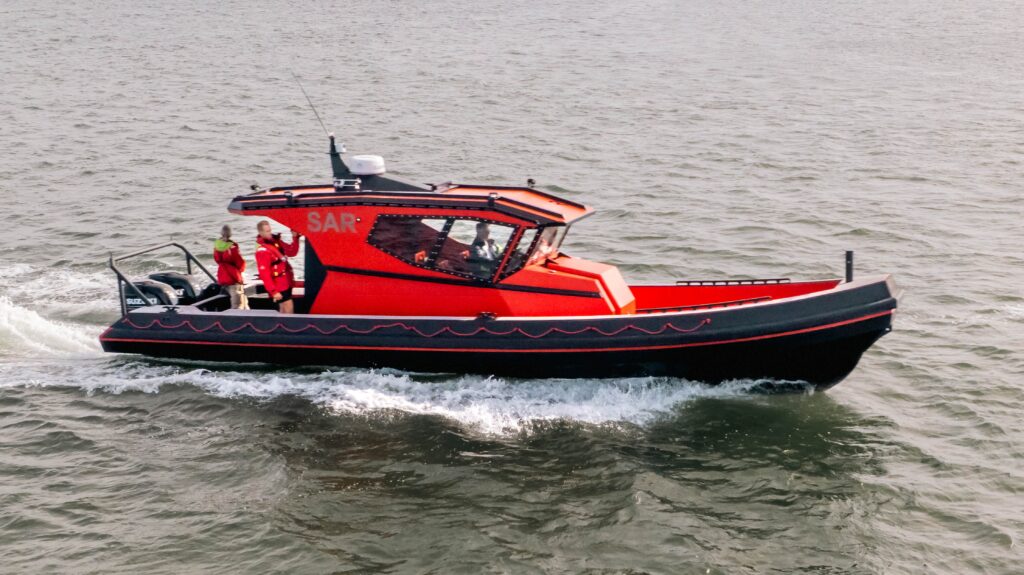
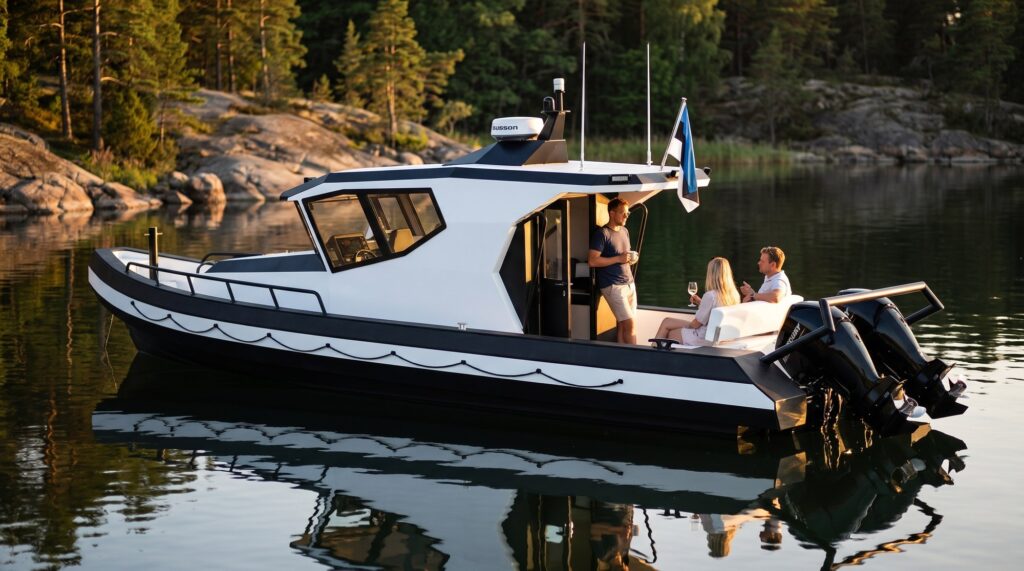
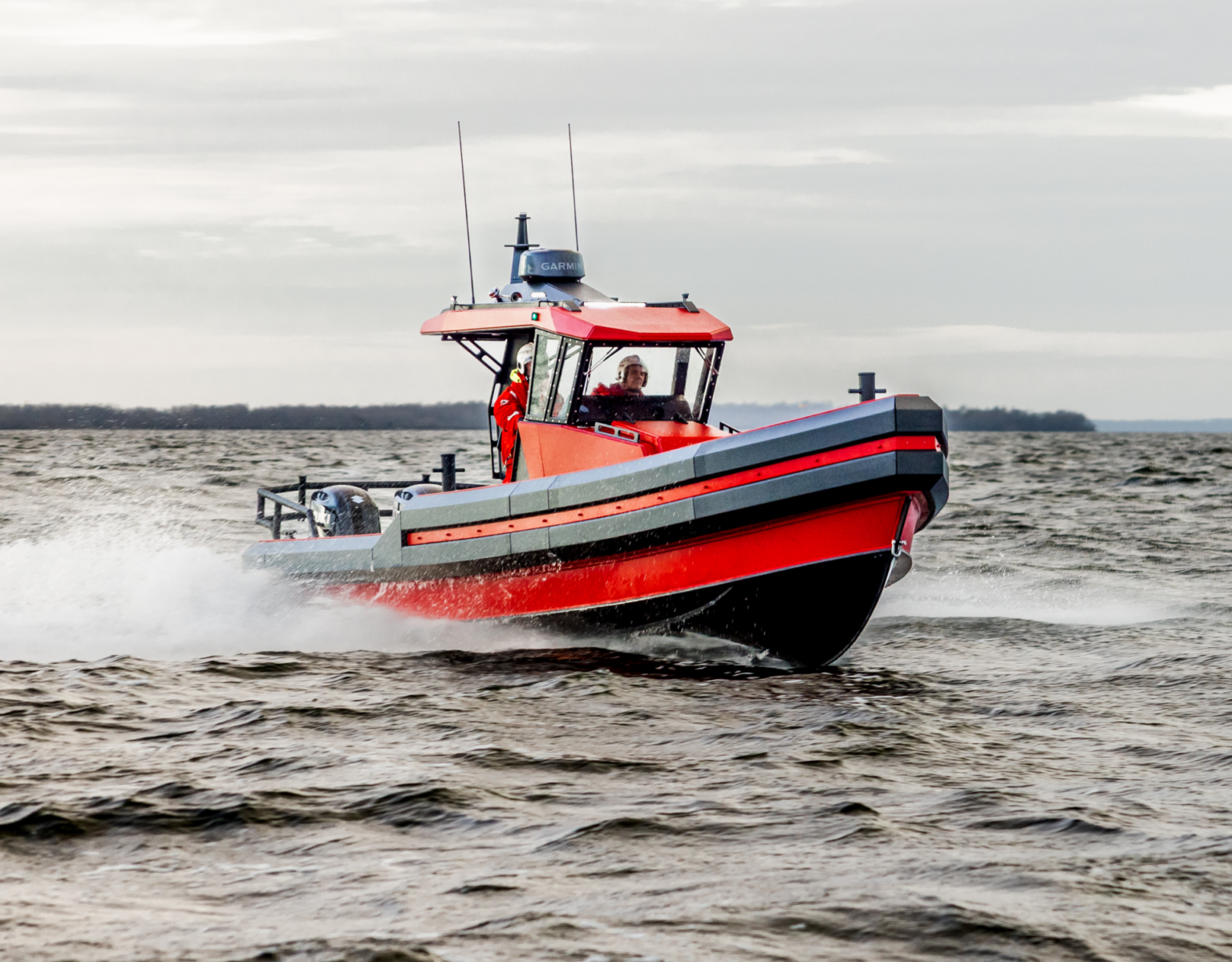
 Photograph
Every boat LarsenB offers today has a welded HDPE hull. HDPE is high-density polyethylene. It comes as thick plate and is welded much like metal, so the hull is built up from plate instead of being moulded. Here is how it compares with the two materials most workboats are made from.
| HDPE | Aluminium | Fibreglass (GRP) | |
|---|---|---|---|
| Impact | Flexes and returns to shape | Dents, and holds | Can crack or delaminate |
| Corrosion | Does not corrode | Needs anodes and care with mixed metals | Does not corrode, can blister |
| Upkeep | No painting. No antifouling in fresh water | Anodes and coatings | Gelcoat and antifouling |
| Noise on board | Dampens vibration and water noise | Resonates more | In between |
| Plate | About three times thicker than aluminium at the same hull weight | Thinner plate | Set by the laminate |
| Repair | Can be welded on site | Weldable, harder in the field | Usually a specialist workshop |
| Sunlight | Stable | Not affected | Relies on its gelcoat |
| End of life | Fully recyclable | Recyclable | Hard to recycle |
Aluminium is a proven material for professional boats, and many public tenders still name it. HDPE's case starts with the plate: at the same hull weight it can be about three times thicker, so a knock that would dent metal is taken up by the material. There are no anodes to replace and no galvanic corrosion to manage, and less engine noise reaches the crew. If your tender leaves the material open, an HDPE hull is worth putting beside the aluminium ones.
Fibreglass suits leisure boats well. Working boats are harder on it. A rock, a quay or a floating log can crack the laminate, water then gets into the structure, and the repair usually needs a dry workshop. HDPE does not absorb water or blister. Its colour runs through the material, so there is no gelcoat to keep up.
Tell us what the boat needs to do. We reply by email from sales@larsenb.com.